
Songdo, Incheon. Republic of Korea 9th International Conference on Indoor Air Quality Ventilation & Energy Conservation In Buildings
IMPORTANT DATES
- Abstract submission Closed
- Full paper submission Closed
- Notification of full paper acceptance (May, 2016)
JOIN COMMUNITY



Conference Tour
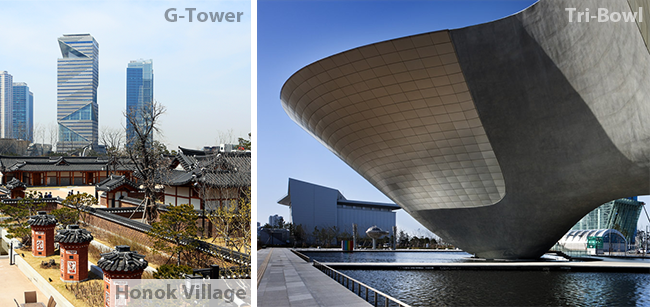
Smart City Tour (Date: Oct 24 th / 25 th 13:30 - 17:30, Limits for 40 people per day)
Smart city tour invites you to several landmark places in Songdo. You can learn Korean typical residential type from the past to the future and smart city plannings of Incheon. The tour includes the guide and transportation between G-Tower and Sheraton Hotel, but we would usually walk along the waterway from the departing location to G-Tower.
Fare: $10 per person.
| Place to Visit | Time required (min) | |
|---|---|---|
| 1 | Songdo ConvensiA | (departure) |
| 2 | Songdo Hanok Village | 30 |
| 3 | Tri-Bowl | 60 |
| 4 | G-Tower (33F observatory) | 40 |
| 5 | Sculpture Park | 20 |
| 6 | Stroll Garden | 20 |
| 7 | Songdo ConvensiA | (arrival) |
※This schedule is subject to change due to weather conditions or local situations.
Korean Culture Tour (Date: Oct 24 th / 25 th 13:30 - 17:30, Limits for 20 people per day)
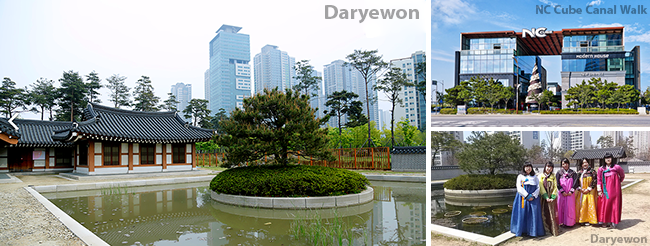
Korean culture tour gives you a chance to experience Korean culture and enjoy a variety of shopping and food at once in Songdo. You can learn Dado (Korean tea ceremony) with Korean traditional etiquette or play traditional games. The tour includes the guide, full transportation, and fare.
Fare: $25 per person.
| Place to Visit | Time required (min) | |
|---|---|---|
| 1 | Songdo ConvensiA | (departure) |
| 2 |
Daryewon
(Korean traditional culture program) |
120 |
| 3 | NC Cube Canal Walk | 90 |
| 4 | Water Taxi | 30 |
| 5 | Songdo ConvensiA | (arrival) |
※This schedule is subject to change due to weather conditions or local situations.
A smart city tour offers a practical way to see how urban planning ideas translate into real streetscapes, residences, and public spaces, complementing the technical discussions of an indoor air quality conference. Participants walk through districts where residential layouts from the past sit alongside newer developments designed around sensor-driven infrastructure. Guides describe how transit, waterways, and pedestrian paths are organized to encourage low-energy movement and to support shared community spaces. The experience highlights how building-level ventilation and airtightness choices connect to wider neighborhood-scale decisions about density, greenery, and energy use. For attendees interested in healthy buildings, the tour makes the link between indoor performance metrics and the outdoor context visible.
Visiting a hanok village within a contemporary smart city district creates an instructive contrast between traditional and modern construction logic. The traditional homes demonstrate natural ventilation strategies, deep eaves, and material choices that respond to the local climate without mechanical systems. Adjacent landmarks, such as sculptural civic centers and observation towers, showcase how contemporary architecture uses HVAC and sensor networks to manage comfort, lighting, and indoor air quality in larger volumes. Walking between these settings helps researchers and practitioners understand how envelope design, controls, and city planning can be coordinated. The juxtaposition underscores that lessons about airtightness, health, and comfort apply across eras, even as the underlying technologies evolve.
Observation decks in tall towers offer a vantage point for thinking about how cities manage airflow, pollution, and heat islands across their built fabric. From elevated platforms, visitors can trace how corridors, parks, and water channels shape local air movement and create favorable microclimates near buildings. This is especially relevant to discussions of indoor air quality, since outdoor air quality and prevailing climate determine how ventilation systems should be sized and operated. Observing the urban fabric also reveals how mixed-use districts influence occupancy patterns, energy demand, and the scheduling of conditioning systems. For conference participants, the vista reinforces arguments for integrating outdoor environmental analysis with indoor modeling and simulation.
Smart city tours frequently pass through innovation districts where pilot projects test new building technologies and digital infrastructure. Stops may include demonstration buildings outfitted with advanced sensors, automated shading, and integrated energy management platforms. These projects often serve as living laboratories, gathering performance data that researchers later use to refine models and tools. Visitors learn how networked controls coordinate HVAC equipment with occupancy sensing, weather forecasts, and grid signals. For indoor air quality professionals, the tours illustrate how distributed sensing and analytics can move practice beyond traditional commissioning toward continuous performance assurance tied to occupant health and building energy goals.
A well-structured tour also serves as a networking opportunity among conference attendees who share interests in indoor environment quality and energy conservation. Shared travel and guided walking create informal settings where participants can compare notes on airtightness standards, ventilation strategies, and modeling tools used in different regions. Combining cultural exploration with technical site visits broadens the conversation beyond scheduled sessions, enriching the overall conference experience. Such tours model a holistic approach to building science, recognizing that healthy indoor environments depend on thoughtful architecture, responsive systems, and well-planned urban surroundings that together support comfort, productivity, and well-being for occupants.