
Songdo, Incheon. Republic of Korea 9th International Conference on Indoor Air Quality Ventilation & Energy Conservation In Buildings
IMPORTANT DATES
- Abstract submission Closed
- Full paper submission Closed
- Notification of full paper acceptance (May, 2016)
JOIN COMMUNITY



Overall program
The conference will be held during 4 days in Songdo, Korea. The program will be consisted of keynote speech, presentation session and etc.
Topic
- Thermal Comfort
- Indoor Environment Quality
- Particles
- Ventilation
- HVAC
- Modeling
- Workshop
- NRF-NSFC
- Thermal Environment
- Indoor Air Quality
- Particles & Control
- Moisture
- Integration
- Smart technology
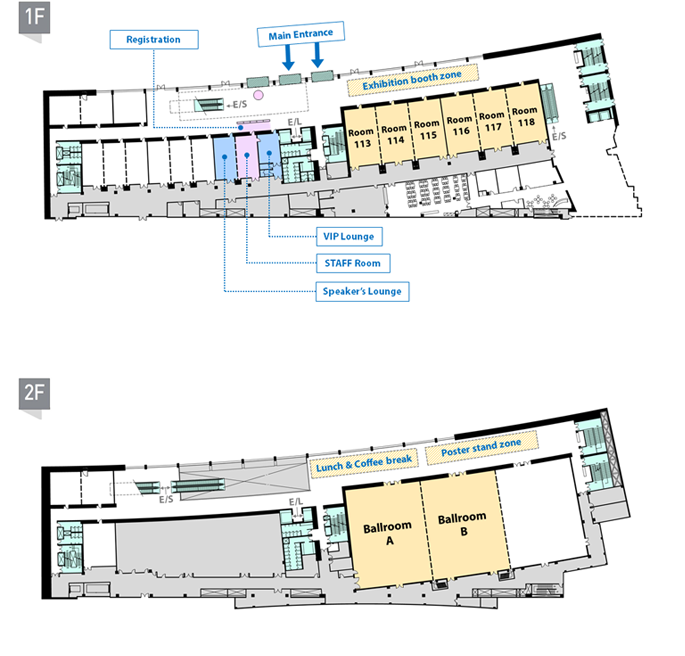
Floor plan
Schedule
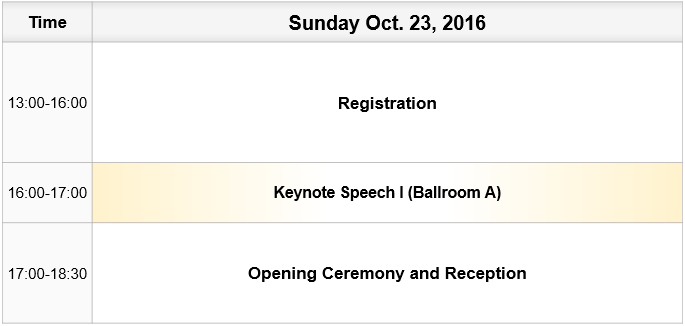
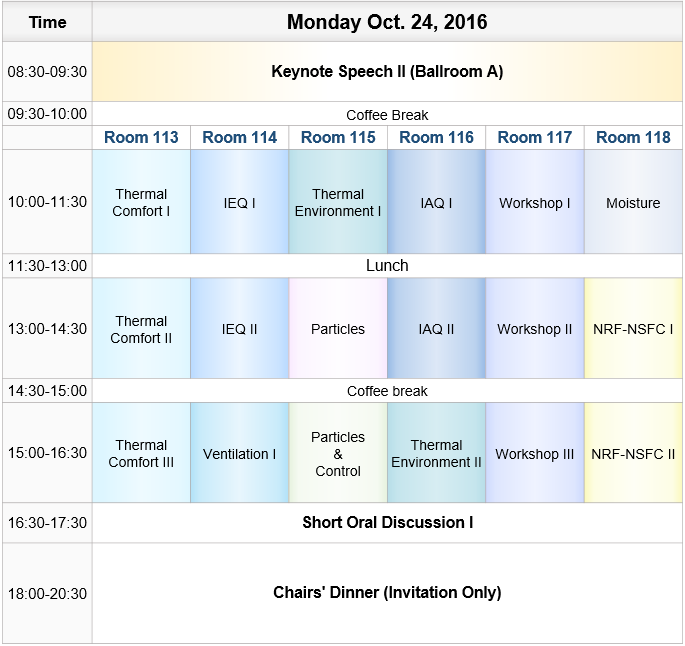
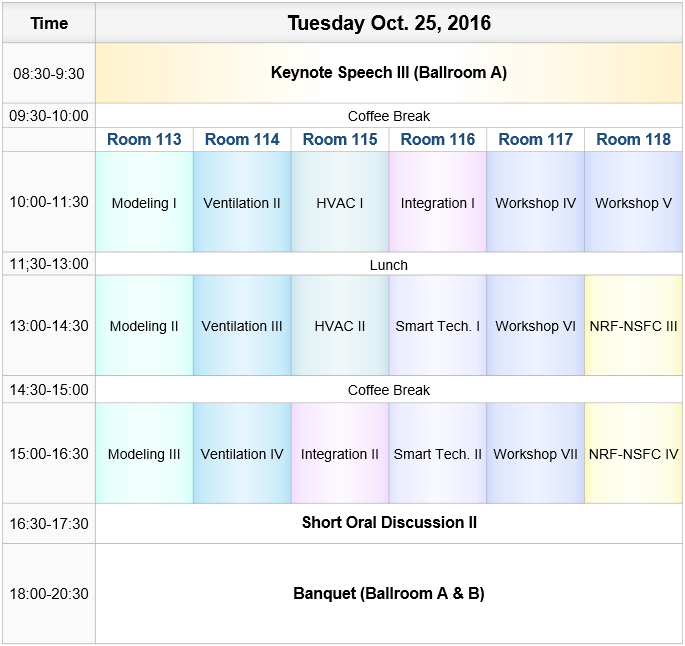
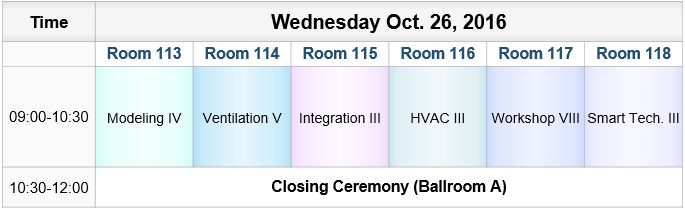
The overall program for the conference spans four days in Songdo, Korea, offering a comprehensive schedule designed to engage researchers and practitioners from around the world. The program gathers experts and industry leaders in indoor air quality and building ventilation, providing a platform for sharing the latest findings and exchanging ideas. Attendees can look forward to keynote speeches delivered by renowned authorities in the field, complemented by a series of focused oral and panel sessions covering a wide spectrum of building research areas. The program also includes structured opportunities for networking, allowing participants to discuss their work, explore potential collaborations, and build lasting professional connections throughout the duration of the gathering.
Thermal comfort and indoor environment quality form central pillars of the technical agenda, reflecting the growing importance of occupant well-being in modern buildings. Sessions explore how environmental conditions within enclosed spaces affect human health, productivity, and satisfaction, drawing on interdisciplinary research from architecture, engineering, and the health professions. Presentations examine the relationships between temperature, humidity, and perceived comfort, while also addressing the role of airtightness and building envelope performance. Researchers share findings on optimal design strategies and indoor air quality measurement techniques, contributing to a deeper understanding of how buildings can be designed and operated to support healthier, more comfortable indoor environments for occupants across diverse climate conditions.
Ventilation, HVAC systems, and computational simulation feature as prominent themes throughout the technical sessions, highlighting their critical role in maintaining healthy and sustainable buildings. Experts discuss advanced approaches to airflow distribution, particle control, and moisture management, examining how integrated design strategies can address complex challenges in modern building design. Modeling and simulation tools are explored in depth, with researchers presenting new methodologies for predicting building behavior and optimizing system performance. Topics also encompass the relationship between ventilation effectiveness and indoor air quality, as well as emerging technologies for sensors, controls, and management systems that support smarter, more responsive environments.
Smart technology and integration represent forward-looking themes that bridge traditional building practices with digital innovation. Sessions examine how sensors, automated systems, and data-driven controls can transform the way indoor environments are monitored and managed, enabling more adaptive and efficient operations. The integration of these technologies supports healthier indoor conditions while reducing energy consumption, aligning with broader goals of sustainability and conservation. Discussions also explore the intersection of smart building features with established disciplines such as architecture and HVAC engineering, illustrating how holistic approaches can yield buildings that are simultaneously comfortable, efficient, and responsive to the needs of their occupants.